
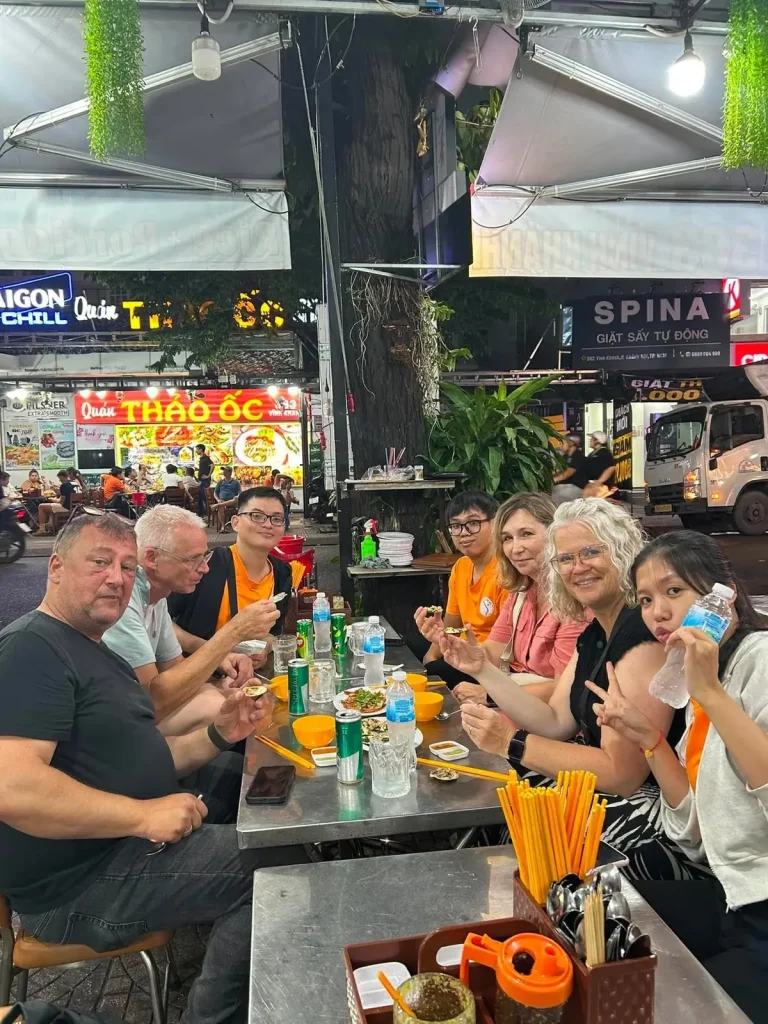
Short answer: yes, street food in Vietnam is safe for most travellers when you choose the stall well. The food itself is rarely the problem. Trouble usually comes from dishes that sit out for hours, untreated water and ice, and raw items washed in it. Eat what is cooked hot in front of you, at a stall that locals keep busy, and you remove most of the risk.
Our guides eat on the street every day in Saigon and Da Nang. This is the checklist they use, written for a first trip.
How do locals choose a safe street food stall?
Locals judge a stall in a few seconds, before they sit down. They look for five things:
- A steady crowd of locals. Fast turnover means the food is made fresh all day instead of waiting in a tray.
- Cooking you can see. A hot wok, a grill or a pot of broth at a rolling boil is a good sign.
- A short menu. Stalls that sell one or two dishes make them hundreds of times a day and do them well.
- Clean handling. Raw meat kept apart from cooked food, herbs covered, and a different hand or tongs for money and food.
- Cold things kept cold. Seafood and meat on ice or in a fridge, not in the sun.
| What to check | Good sign | Walk on if |
|---|---|---|
| Customers | Busy with locals at meal times | Empty at lunch or dinner |
| Cooking | Made to order and served steaming | Lukewarm food sitting in trays |
| Menu | One or two specialities | A long menu for tourists only |
| Handling | Raw and cooked kept apart | Flies, dirty water, uncovered meat |
Which street foods are safest on your first day?
Start with dishes that are cooked hot and eaten straight away:
- Noodle soups such as phở, bún bò or Da Nang’s bún chả cá, ladled from boiling broth.
- Grilled meats such as cơm tấm (broken rice with grilled pork) or bún thịt nướng.
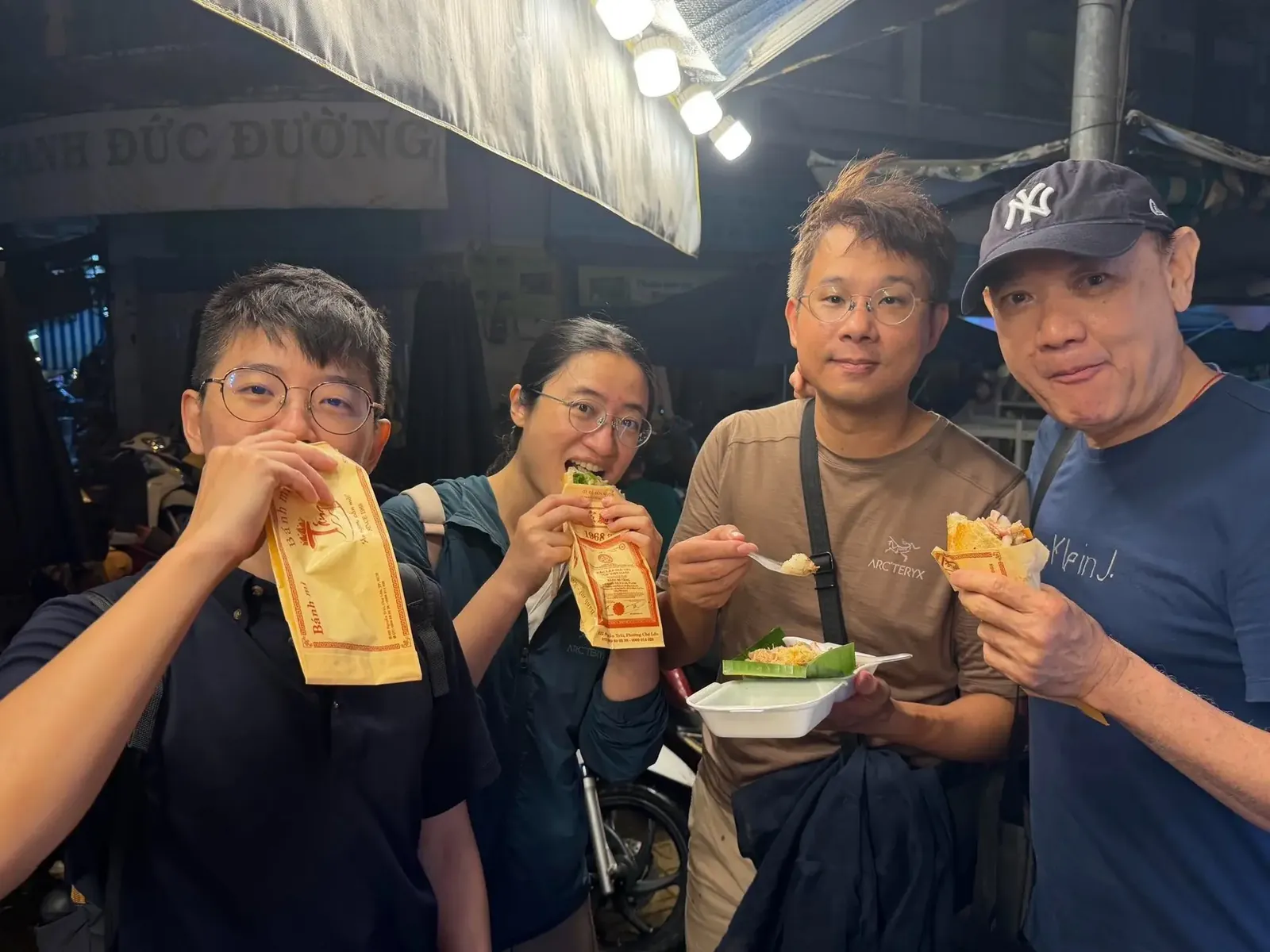
- Bánh mì with bread toasted on the spot.
- Bánh xèo, the crispy pancake, eaten fresh off the pan.
Take a little more care with raw herb plates if your stomach is sensitive, raw or undercooked seafood, pre-cut fruit and anything that has clearly been sitting out. You do not have to skip them, just choose busy places for them.
Is the ice and water safe to drink?
Do not drink tap water. Bottled water is sold everywhere, and many cafés and restaurants serve filtered water. In the cities, most ice in drinks comes from ice factories; it often arrives in uniform cubes or tubes with a hole in the middle. If the ice looks like it was chipped from a block of unknown origin, or you simply feel unsure, order a sealed drink or a hot coffee instead.
Is a street stall safer than a restaurant?
Not always. A packed stall cooking to order can be fresher than a quiet restaurant reheating food. Restaurants do make some things easier: clearer menus, cleaner bathrooms, air conditioning and simpler conversations about allergies. A good plan mixes both: street food when you want the real thing, a sit-down meal when you are tired, travelling with small children or managing an allergy.
How do I handle food allergies and spice?
Fish sauce, shrimp paste, peanuts and shellfish appear in many dishes and sauces. Show a short note in Vietnamese, for example Tôi bị dị ứng đậu phộng (I am allergic to peanuts). For spice, say không cay (not spicy); fresh chilli is usually served on the side anyway.
What should I do if my stomach feels off?
Rest, drink plenty of bottled water and eat plain food such as rice or clear broth for a day. If you have a high fever, blood in your stool, or symptoms that get worse or last more than a day, see a doctor. International clinics in Saigon and Da Nang are used to treating travellers.
The easy way: let a local choose the stalls
On our food tours your guide takes you to stalls they and their families eat at, orders the right dishes and tells the cook about any allergy. In Saigon, Saigon After Dark covers the classic night stalls; in Da Nang, Da Nang Signature Dishes is the best first taste of the city. See all Saigon food tours and Da Nang food tours.
Frequently asked questions
Is it safe to eat street food in Vietnam?
Yes, for most travellers. Choose busy stalls, eat food cooked hot in front of you and drink bottled or filtered water.
What is the safest Vietnamese street food for beginners?
Hot noodle soups such as phở, grilled pork with rice or noodles, toasted bánh mì and freshly made bánh xèo.
Is ice safe in Vietnam?
In city cafés and restaurants most ice comes from ice factories. If you are unsure where it came from, choose a sealed drink.
Can I eat the fresh herbs?
Most travellers do without trouble at busy stalls. If you have a sensitive stomach, eat fewer raw herbs for the first few days.