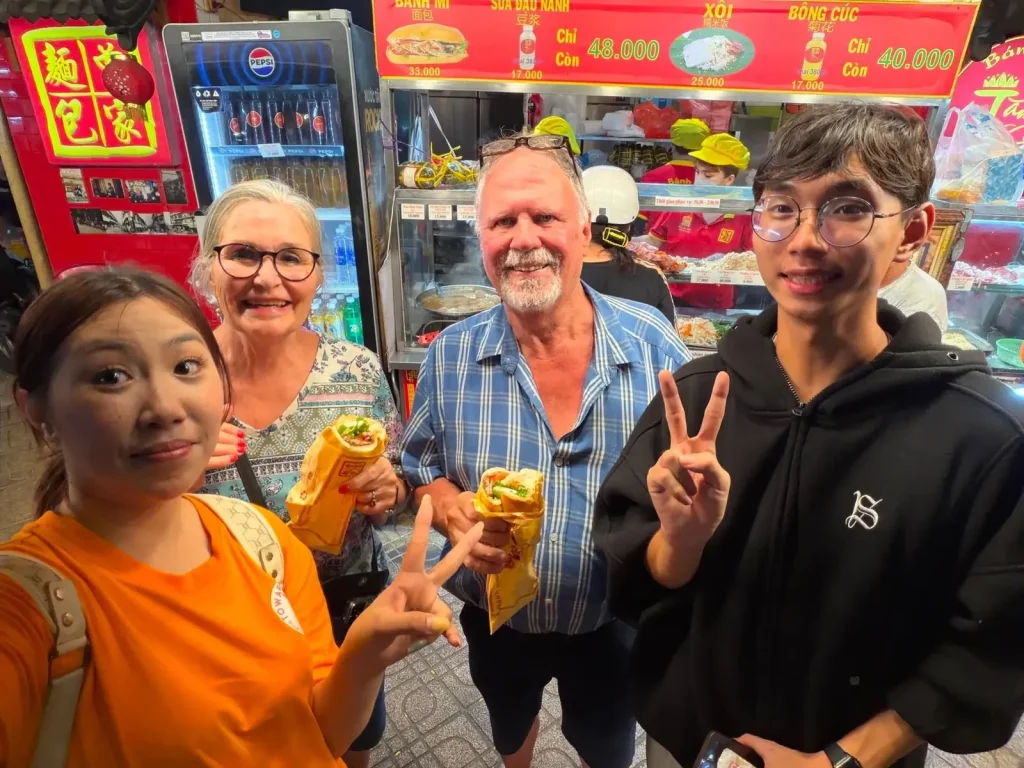
Vietnamese table manners are relaxed, but a few rules matter: never stand your chopsticks upright in a bowl of rice, take food from shared dishes into your own bowl, let the oldest person start, and join in when the table toasts. Slurping noodles, eating with your hands and a messy street table are all normal. Nobody expects a visitor to get everything right; trying is what people notice.
What are the chopstick rules in Vietnam?
- Do not stand chopsticks upright in rice. It looks like incense sticks on an altar for the dead. Lay them across your bowl or on the rest.
- Do not tap your bowl with chopsticks; it is seen as rude or like calling for food.
- Do not pass food from chopsticks to chopsticks. Put it in the other person’s bowl instead.
- Do not point at people with your chopsticks.
- Do pick up your bowl. Holding a rice or noodle bowl close to your mouth is good manners, not sloppy.
- Do use the spoon in your other hand for soup and broth.
How does sharing food work at a Vietnamese meal?
Most meals are family style. Dishes go in the middle, everyone has a small bowl of rice, and you take a little at a time rather than piling your bowl. Some people turn their chopsticks around to serve from a shared plate; others use serving spoons. Hosts often put the best pieces in a guest’s bowl: accept them and say thank you, cảm ơn. Our Saigon food guide lists the classic dishes to order first.
Who starts eating, and who pays?
Wait for the oldest person or the host to start, or for someone to invite you to eat. In a group of locals, one person often pays for the whole table, usually the host or the most senior person, and offering to split can be politely refused. With friends your own age, taking turns is common.
How do you toast in Vietnam?
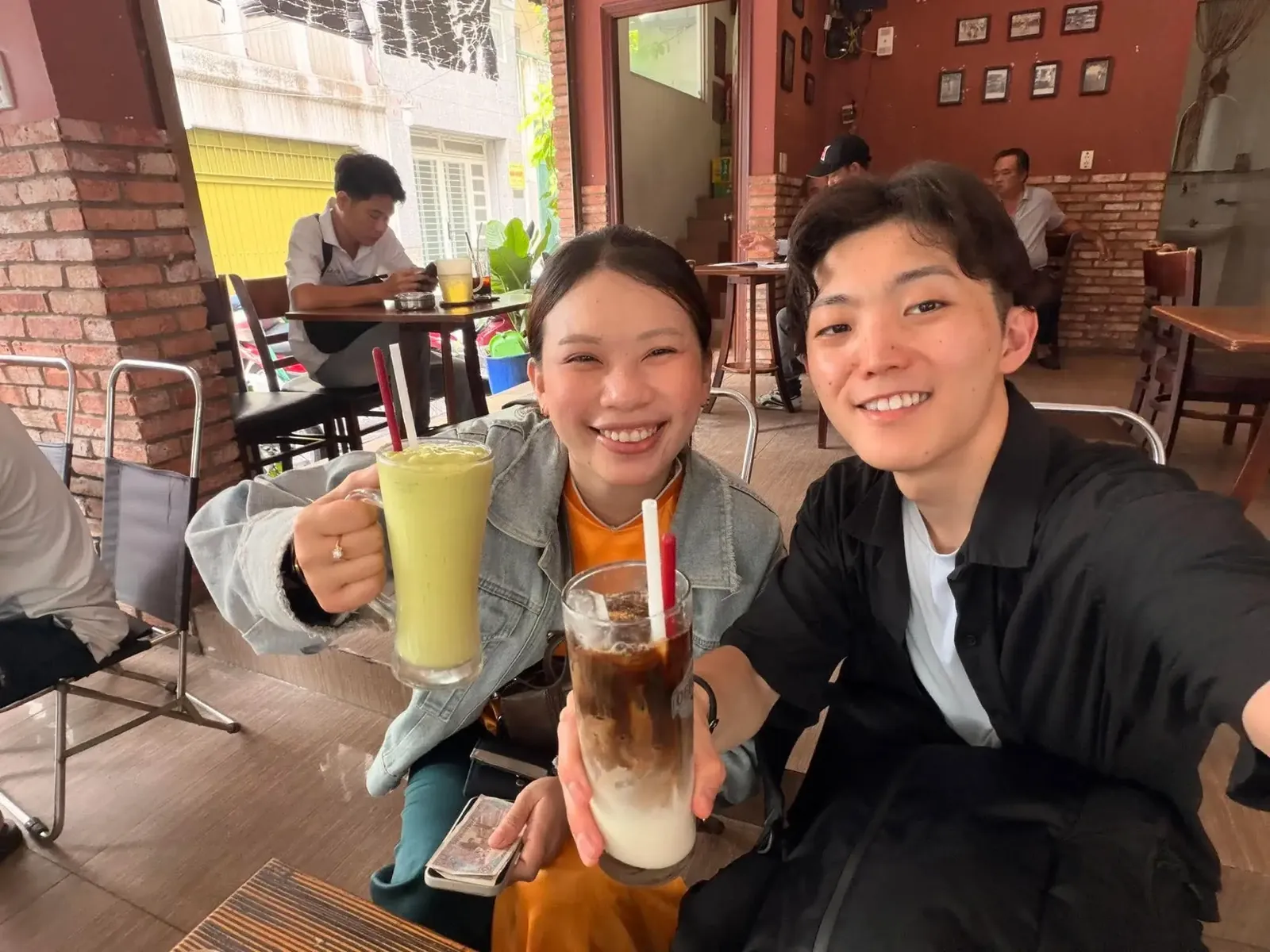
The table raises glasses together and counts một, hai, ba, dô! (one, two, three, cheers!). Toasts come often during a meal, and it is polite to join each one, even with a soft drink. Hold your glass a little lower than an older person’s when you clink.
Which Vietnamese food customs surprise first-time guests?
- Tiny plastic stools at street stalls are normal, even at famous places.
- Napkins on the floor: at some busy old-style stalls, used tissues are dropped under the table and swept away later. Copy the table, not your habits.
- Wiping chopsticks with a napkin before eating is a common habit, not a comment on the stall.
- Herbs are eaten, not decoration. The plate of greens is part of the dish.
- Iced tea (trà đá) often arrives free or for a very small charge. Unsure about ice? See how to choose a safe street food stall.
- You may need to call for the bill: say tính tiền when you are ready to pay.
Is tipping expected at Vietnamese restaurants?
Not at street stalls or local shops. At sit-down restaurants a small tip for good service is welcome but not required. Tipping guides and riders after a tour is appreciated.
Practise with a local at the table
On our food tours your guide sits down and eats with you, shows you how to wrap, dip and season each dish, and orders in Vietnamese. Good first rides are Saigon Must-Eats in Saigon and Da Nang Signature Dishes in Da Nang. Before you go, learn how to eat phở in Saigon and how to eat bánh xèo.
Check dates for Saigon Must-Eats and practise your một, hai, ba, dô with a local.
Frequently asked questions
Why should you not stick chopsticks in rice in Vietnam?
Chopsticks standing upright in rice look like incense sticks on an altar for the dead, so it is seen as bad luck.
Is it rude to slurp noodles in Vietnam?
No. Slurping noodle soup is normal and shows you are enjoying it.
How do you say cheers in Vietnamese?
Một, hai, ba, dô! It means one, two, three, cheers. Everyone clinks and drinks together.
Do you tip in Vietnam?
Not at street stalls. A small tip at sit-down restaurants and for tour guides is appreciated but not required.
Should I pick up my bowl when eating?
Yes. Holding your rice or noodle bowl near your mouth is normal good manners in Vietnam.