
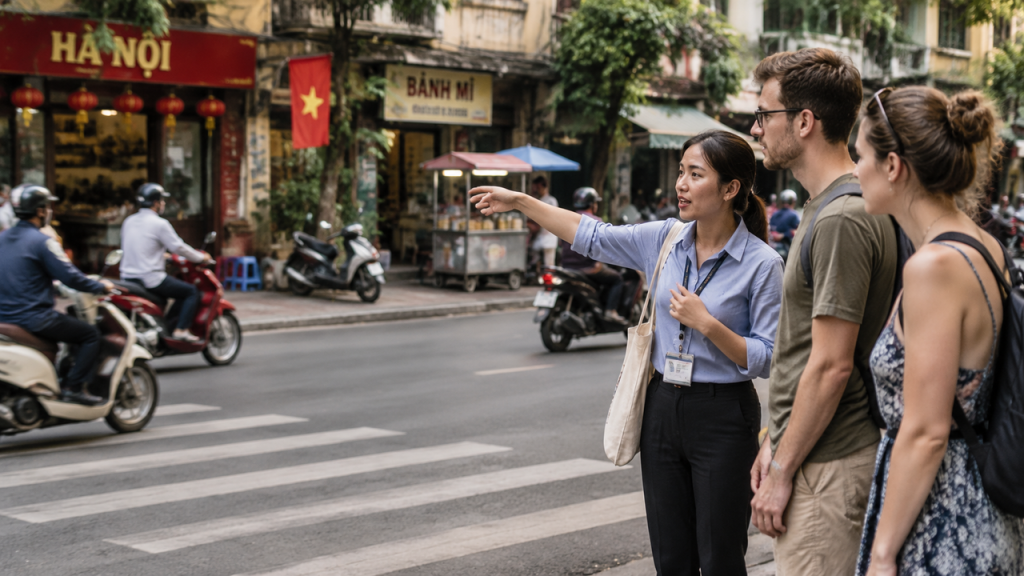
Crossing the Street in Vietnam: A Traveler’s Safety Guide
Crossing the street in Vietnam can feel intimidating when motorbike traffic streams around you from every direction and familiar road rules seem to disappear. On a first visit to Hanoi or Ho Chi Minh City, the noise and constant movement can make even a short walk feel like a challenge. The good news is that a calm, attentive approach helps you make better decisions.
This guide explains how to read the flow, choose a sensible place to cross, use pedestrian crossings where available, and recognize when waiting is the smarter move. You will find practical steps for solo travelers, couples, and families exploring local food streets, with a reminder to avoid rushing or assuming drivers have seen you. For more on-the-ground inspiration, explore the Vietnam street adventures that bring you closer to everyday city life.
What Crossing the Street in Vietnam Is Really Like
Crossing the street in Vietnam can feel like stepping into a moving puzzle: scooters stream past, cars take wider turns, and a painted crossing may not make traffic stop. The safest first move is to pause, read the flow, and choose a signal, pedestrian bridge, or quieter crossing when available.
In busy districts, traffic may seem chaotic because vehicles approach from several directions and drivers adjust their paths continuously. That does not mean pedestrians should simply walk into the stream. Move only when you can see a clear route, and never assume drivers have noticed you.
A practical guide to crossing
Featured answer: To cross a busy street in Vietnam, use a pedestrian signal or bridge whenever possible. If there is no protected crossing, wait for a clear gap, keep your pace steady, and watch traffic from every direction. Do not run, weave, use your phone, or rely on a driver stopping.
Why roads can feel chaotic
Motorbikes can pass around slower vehicles, while cars and buses need more room to turn and stop. At intersections, watch for traffic coming from side streets as well as the lane directly in front of you. A zebra crossing is useful, but it is not a guarantee that vehicles will yield.
For example, a first-time visitor in central Hanoi may find a narrow street easier to assess than a broad, fast-moving boulevard. If a crossing feels beyond your comfort level, wait for a signal, use an overpass, or ask a nearby hotel or shop staff member for the safest route.
What to expect in different places
| Setting | What you may notice | Safer choice | Extra caution |
|---|---|---|---|
| Major city | Dense scooters and turning traffic | Use signals or bridges | Check side streets |
| Small town | Quieter roads, occasional fast vehicles | Choose a visible, open stretch | Do not assume low traffic means safe |
| Tourist area | Foot traffic mixed with scooters | Follow marked pedestrian routes | Watch for vehicles near curbside stalls |
Traveling solo, as a couple, or with children? Cross one person at a time only where visibility is good, keep children close, and avoid stepping out from behind parked vehicles. A local guide can help you read an unfamiliar neighborhood; explore locally led Vietnam tours for a more supported adventure.
Take your time rather than treating a crossing as a test of bravery. If you cannot judge the traffic, wait or choose another route. That small detour is a better travel story than a risky shortcut.
How to Cross the Street in Vietnam Step by Step
Quick answer: To cross a busy street in Vietnam, choose a signalized crossing, marked crosswalk, or pedestrian bridge, then check every direction and watch for one-way traffic. Cross only when the route is clear, walk steadily without using your phone, and never assume motorbikes will stop. If uncertain, wait or ask for help.
Choose a visible crossing point
Look for traffic lights, a zebra crossing, or an overhead bridge, and check whether vehicles can approach from a one-way side street. A painted crosswalk does not guarantee drivers will yield. If sightlines are blocked by parked vehicles or street stalls, move to a clearer spot.
Walk steadily and stay predictable
Wait for a safe opening, keep watching both directions, and cross directly at a steady walking pace. Do not run, weave between scooters, or step backward suddenly. If the junction feels confusing, pause on the curb and ask a nearby shopkeeper or guide; explore guided local tours if you would rather discover busy neighborhoods with local support.
- Put your phone away and keep bags close.
- Never assume eye contact means a driver has seen you.
- Use a pedestrian bridge or another route if traffic does not leave a safe gap.
| Crossing option | Best for | What to check | Safer choice when unsure |
|---|---|---|---|
| Signal or crosswalk | Marked intersections | Traffic in every direction | Wait for a clear opening |
| Pedestrian bridge | Wide, fast roads | Bridge access and exit | Use the bridge |
The key is not to imitate a local or trust that traffic will flow around you. Choose the safest crossing available, take your time, and plan your Vietnam adventure with local support when you want extra confidence exploring on foot.
Crossing Vietnamese Roads at Intersections, Roundabouts, and at Night
Crossing the street in Vietnam takes extra care at intersections, where scooters may turn across your path even when you have a green pedestrian signal. The safest approach is to pause, check every direction, and cross only when the route is clear enough to walk steadily.
Roundabouts, rain, and evening traffic can make it harder to judge speed and distance. Use marked crossings or pedestrian bridges when available, stay visible, and ask for help rather than stepping into a flow you cannot read.
Adjust your approach around turning vehicles, roundabouts, and traffic-light intersections
Quick guide: At intersections, watch for vehicles turning across the crossing and confirm they have stopped before you move. At roundabouts, wait for a clear gap and cross one section at a time. At night or in rain, choose a well-lit crossing, keep your attention on traffic, and do not assume drivers have seen you.
At a busy Ho Chi Minh City junction, for example, a scooter may turn through a pedestrian crossing while the signal changes. Look left, right, and behind you, then continue scanning as you walk. Do not run, weave, or follow someone automatically; each traveler needs a clear view of the road.
If you are exploring a local market or backstreet and feel unsure, step back to a safe spot and ask a nearby shopkeeper or guide for help. A guided local street experience can also help first-time visitors understand how busy areas work without rushing into a crossing.
Stay visible and take extra care in rain, low light, and crowded areas
Rain blurs sightlines and makes road surfaces slippery. Avoid crossing from between parked vehicles, keep your phone away, and make sure bags or umbrellas do not block your view. With children, hold hands and cross together; do not let anyone lag behind.
| Situation | What to do | Avoid | Safer choice |
|---|---|---|---|
| Roundabout | Wait for a clear gap and scan continuously | Stepping into moving traffic | Use a crossing or bridge |
| Rain or darkness | Choose a lit route and stay visible | Rushing or relying on eye contact | Wait for traffic to stop |
When visibility is poor or traffic is moving too fast, do not force a crossing. Take a taxi or ask a trusted local to guide you to a safer point. For a more confident, street-level introduction, explore Street Food Adventure and plan your next adventure with local support.
When to Wait, Follow a Local, or Use a Crosswalk
For crossing the street in Vietnam, the safest choice depends on the road, the traffic flow, and whether you can see a clear route across. A painted crosswalk is useful, but it does not guarantee that motorbikes or cars will stop, and stepping out because someone else does can leave you exposed.
Take a moment at the curb to check both directions, look for turning vehicles, and choose the option that gives you the most control. If traffic feels too fast or unpredictable, wait, use a pedestrian bridge or underpass, or choose another way to cross.
Quick answer: wait, cross with others, or use a crossing
For crossing the street in Vietnam, use a marked crossing or pedestrian signal where available, but wait until traffic gives you a clear, manageable gap. Walk steadily, stay alert, and never assume drivers will stop. Use a bridge or underpass on fast, wide roads; if unsure, wait or take a ride.
Choose the option that fits the road
| Option | Best for | What to do | Watch out for |
|---|---|---|---|
| Wait for a gap | Quiet or narrow streets | Wait until the full crossing looks manageable | Fast bikes and vehicles turning in |
| Cross with others | Busy streets with a legal crossing | Stay together and move at a steady pace | Do not treat another person as a shield |
| Use a crossing or bridge | Major roads and intersections | Follow signals and marked access routes | Vehicles may still turn across your path |
A local’s timing can help you understand how traffic moves, but do not follow someone blindly into the road. Make your own check first. With children, hold hands and cross as a group; if the route is unclear, wait for a quieter moment. On a wide road with fast traffic, take the pedestrian bridge or underpass rather than trying to judge a gap.
If you want to explore local neighborhoods with less guesswork, browse Vietnam guided tour options and ask about routes suited to your group.
Mini insight: the best crossing is not always the quickest one. If you cannot see the far curb clearly, traffic is moving too fast, or you feel pressured to rush, step back and wait or take a taxi or ride-hailing car.
Common Mistakes, FAQs, and a Safer Walking Plan
Crossing the street in Vietnam feels less daunting when you stay calm, stay visible, and choose a manageable crossing. The biggest mistakes are stepping out while looking at a phone, suddenly stopping or running, and assuming a scooter or car will yield because you are on a crosswalk.
Use this simple rule: pause at the curb, scan in every direction, and cross only when you can keep a steady pace without forcing drivers to brake or swerve. If the flow does not leave a safe opening, wait or choose another route.
A quick safety guide
For safer street crossing in Vietnam, follow these steps:
- Put your phone away and remove headphones.
- Look for a marked crossing, traffic signal, pedestrian bridge, or crossing guard.
- Make a brief glance toward approaching drivers if useful, but never rely on eye contact to stop traffic.
- Walk steadily when the way is clear. Do not run, weave, or step backward into traffic.
Featured answer: Cross only when you can move at a steady pace and have a clear, safe path. Use a marked crossing where available, keep watching traffic as you walk, and never assume drivers will stop. If vehicles keep coming, wait, ask for local help, or take another route.
Common questions
Can you cross outside a crosswalk? Prefer marked crossings and follow local signals. If none is nearby, choose a place with clear visibility and a genuinely safe gap; do not cross from between parked vehicles.
What if traffic does not stop? Stay on the curb. Wait for a safe opening, use a pedestrian bridge, or ask a nearby shopkeeper or crossing attendant for help. Never touch or hold onto a moving motorbike.
Is it safe with children? Hold hands, keep children on the side away from traffic, and use crossings or bridges. If you feel uncertain, take a taxi or ride-hailing car instead.
| Situation | Safer choice | Avoid | Why |
|---|---|---|---|
| Busy road | Use a signal or bridge | Following a stranger blindly | Their route may not be safe for you |
| Family crossing | Hold hands and wait | Rushing to keep up | Children need a steady, supervised crossing |
Start on a quieter street in daylight and practice judging traffic from a safe curb. When you feel ready to explore local food stalls and lively neighborhoods, browse Vietnam adventure tours for ideas, and keep choosing the route that feels safe rather than the one that saves a minute.