
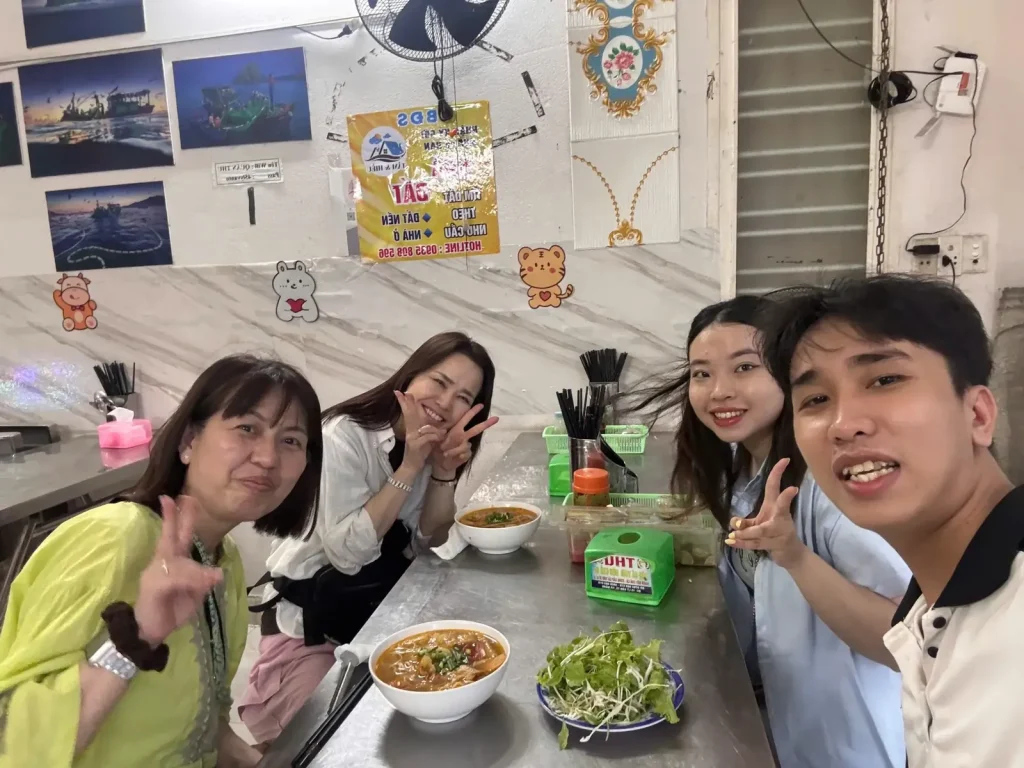
Da Nang cooks central Vietnamese food: bolder, saltier and often spicier than Saigon’s, built on turmeric, fish sauce, fresh herbs and seafood from the coast. If you only try three things, make them mì Quảng, bún chả cá and bánh xèo. Eat noodles in the morning, snacks in the afternoon and seafood by the beach at night.
What are the must-try dishes in Da Nang?
- Mì Quảng. Wide turmeric rice noodles with shrimp, pork, peanuts, herbs and a sesame rice cracker, served with just a little broth. The dish locals are proudest of.
- Bún chả cá. Fish cake noodle soup in a light, slightly sweet broth. A gentle, very Da Nang breakfast.
- Bánh xèo. Small, crispy turmeric pancakes, rolled in rice paper with herbs and dipped in a thick peanut sauce.
- Bánh bèo. Little steamed rice cakes topped with dried shrimp and crispy pork skin, eaten from tiny saucers.
- Bánh tráng cuốn thịt heo. Rice paper rolls you build yourself with sliced boiled pork, herbs and vegetables, dipped in fermented anchovy sauce.
- Bún mắm nêm. Rice noodles with pork and a pungent anchovy dressing. For adventurous eaters.
- Seafood. Grilled squid, clams steamed with lemongrass and crab cooked with tamarind, ordered by weight.
- Chè. Sweet dessert soups and puddings with beans, jelly, fruit and coconut milk, perfect on a hot afternoon.
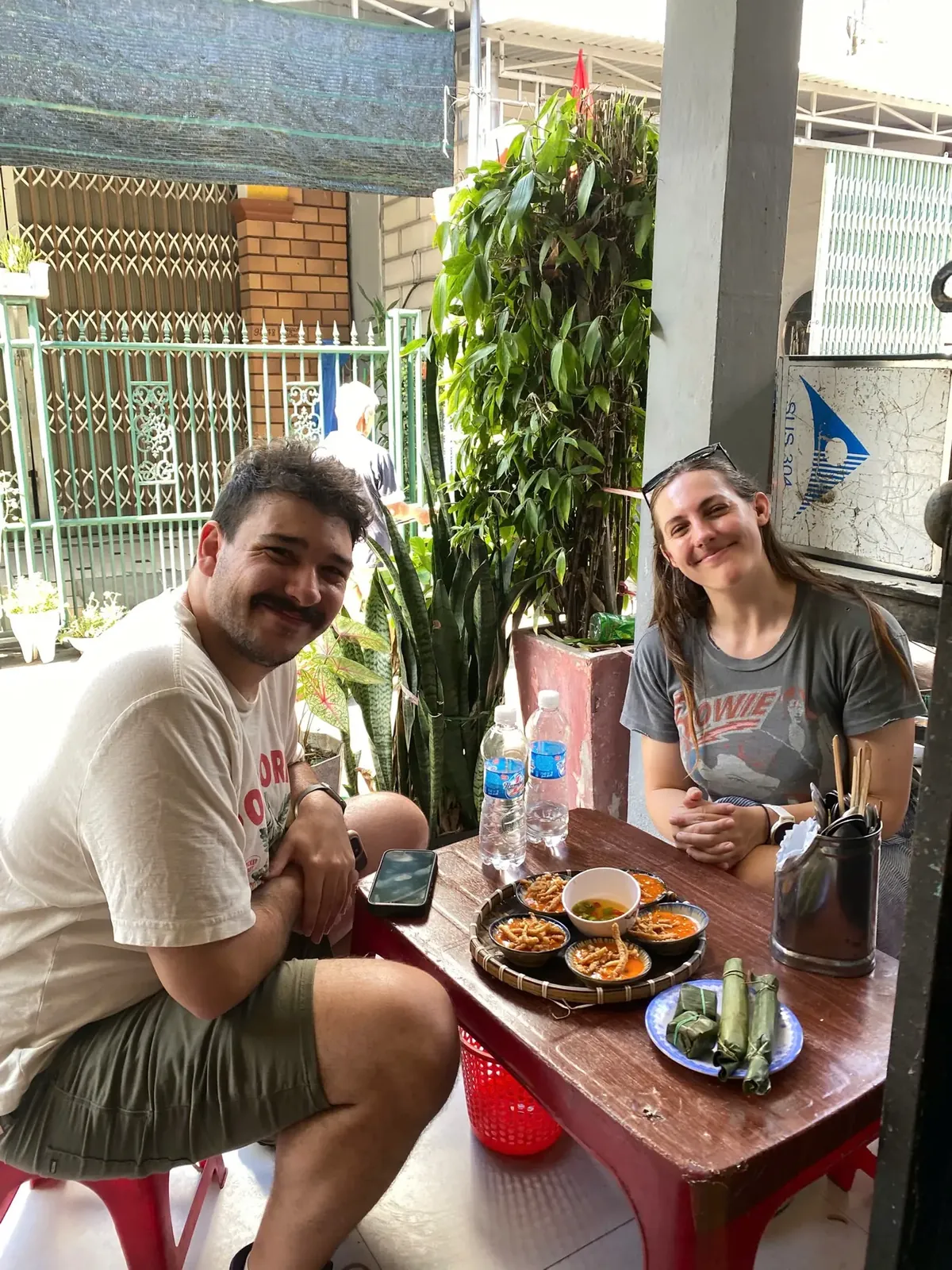
When do locals eat each dish?
| Time | What to eat | Tip |
|---|---|---|
| Breakfast | Bún chả cá, mì Quảng, bánh mì | Many noodle stalls sell out by mid-morning |
| Lunch | Mì Quảng, bún thịt nướng, rice plates | Look for stalls with one dish on the sign |
| Afternoon | Coffee, chè, bánh bèo, bánh tráng cuốn | Snack time in the heat of the day |
| Dinner | Bánh xèo, seafood, grills | Seafood restaurants line the beach road |
Where do locals eat in Da Nang?
Away from the beachfront. Two good starting points are Cồn Market, a big local market with a busy food area for snacks and noodle bowls, and Han Market in the centre, easy to reach and good for a first look. For seafood, the restaurants with live tanks along the beach road by My Khe are the classic dinner. Our Da Nang seafood markets guide explains how to buy and get it cooked.
Is Da Nang food spicy?
Central Vietnamese food is spicier than the south’s, but most heat comes from fresh chilli and chilli sauce served on the side. Ask for không cay (not spicy) if you want to be sure.
How much does food cost in Da Nang?
Street food is cheap. A bowl of mì Quảng or bún chả cá at a local shop usually costs well under 100,000 VND (about $4), often closer to half that. Seafood is priced by weight, so always ask the price per kilo before you order.
What mistakes do visitors make with Da Nang food?
- Only eating on the beachfront and missing the neighbourhood noodle shops.
- Skipping breakfast, when bún chả cá and mì Quảng are at their best.
- Ordering seafood without checking the price per kilo first.
- Expecting Saigon flavours. Central food is saltier and more pungent; that is the point.
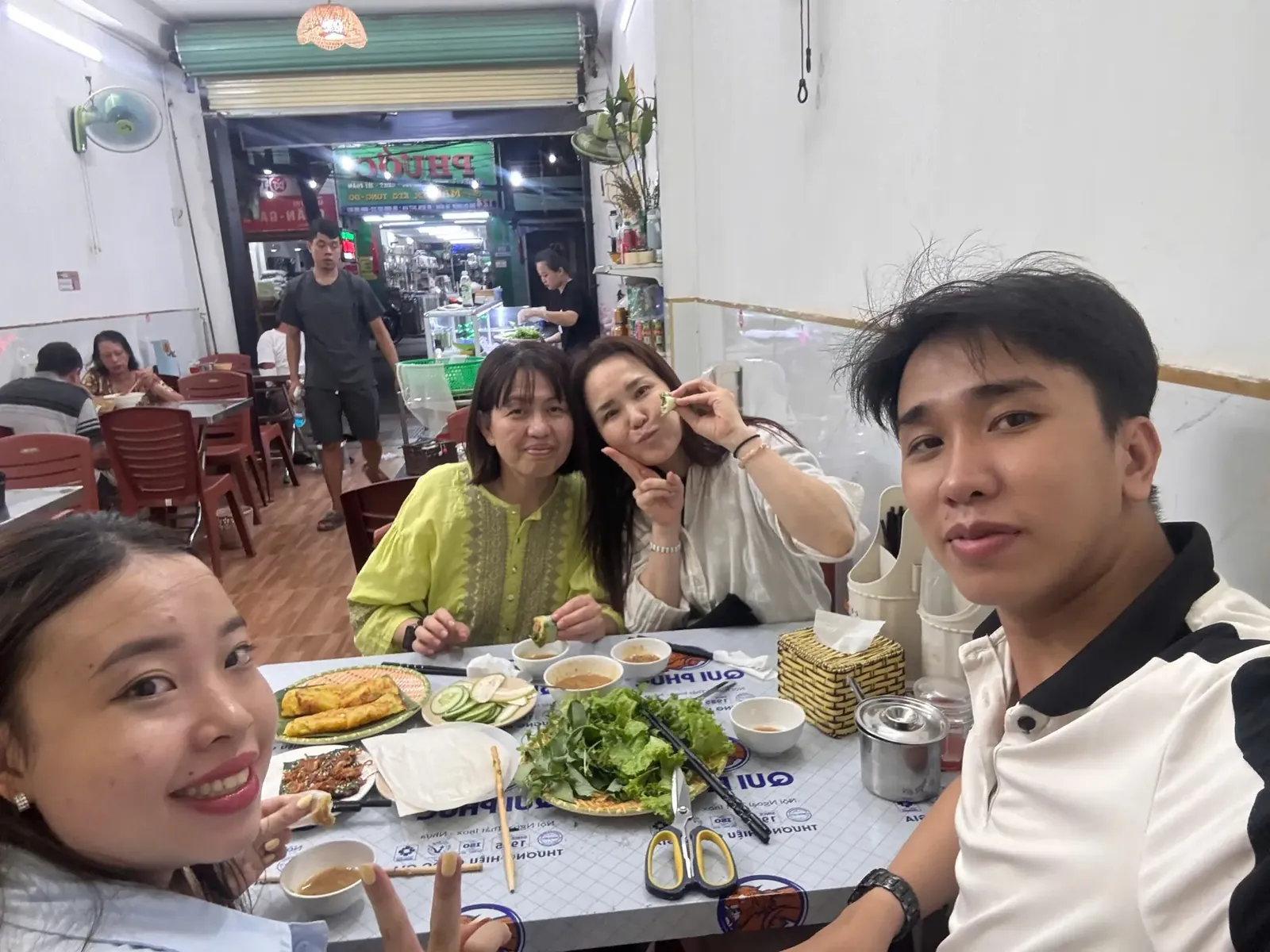
What is the easiest way to taste Da Nang in one evening?
Join a food tour with a local rider. Da Nang Signature Dishes covers mì Quảng, bánh xèo, bánh bèo, bún thịt nướng, coffee and dessert for $45 per adult. Da Nang Michelin Food focuses on Michelin-selected spots for bún chả cá and mì Quảng, and Da Nang Coast and Local Food adds the beaches and a fishing village. Compare them on our Da Nang food tours page.
Frequently asked questions
What is the most famous food in Da Nang?
Mì Quảng, turmeric noodles from neighbouring Quảng Nam province, and bún chả cá, fish cake noodle soup.
What should I eat first in Da Nang?
Bún chả cá or mì Quảng for breakfast, bánh xèo for dinner, and seafood by the beach on another night.
Can vegetarians eat well in Da Nang?
Yes. Look for chay eateries, and ask for vegetarian versions of mì Quảng and bánh xèo. Tell your tour guide when you book.
Is Da Nang street food safe?
Busy stalls cooking to order are a good choice. Read how to choose a safe street food stall before your trip.