
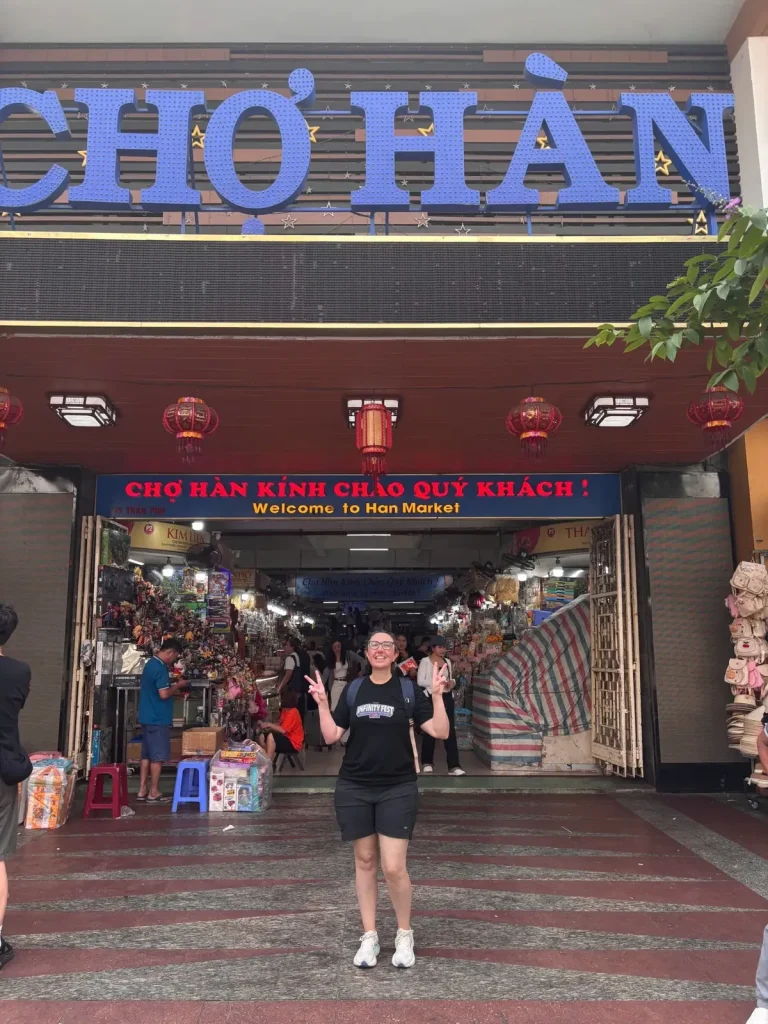
For the freshest seafood in Da Nang, go early. At dawn, basket boats land their catch on the beach at Mân Thái fishing village and the city’s fishing port is at its busiest. Later in the day, neighbourhood markets and Han Market are easier to visit. Wherever you buy, agree the price per kilo first, watch it weighed, then take it to a nearby restaurant that cooks it for a fee.
Where are the seafood markets in Da Nang?
| Place | When to go | Best for |
|---|---|---|
| Mân Thái fishing beach (Sơn Trà) | Around sunrise | Watching basket boats land the catch; the most atmospheric |
| Thọ Quang fishing port | Before dawn | The wholesale rush; busy, wet and fascinating |
| Neighbourhood markets such as Bắc Mỹ An | Morning or late afternoon | Buying a small amount near the beach hotels |
| Han Market (Chợ Hàn) | Daytime | An easy first visit in the centre, including dried seafood |
| Seafood restaurants on the beach road | Evening | Choosing from live tanks without visiting a market |
Markets are working places. Wear shoes you do not mind getting wet, keep to the side of the porters and ask before photographing people up close.
How do I check if seafood is fresh?
- Fish: clear, bulging eyes, red gills and firm flesh that springs back.
- Shrimp and prawns: shiny shells, heads firmly attached, no black spots.
- Squid: glossy skin and a clean smell of the sea.
- Clams and snails: shells closed, or closing when tapped.
- Crab: lively and heavy for its size.
- The stall: plenty of clean ice, running or fresh water and a steady stream of local buyers.
How does buying seafood work?
- Walk past two or three stalls before choosing.
- Point at what you want and ask the price per kilo (bao nhiêu một ký?).
- Watch it weighed and agree the total before anything is cleaned.
- Ask the stall to clean it, or take it as it is.
- Bring it to a nearby restaurant that cooks customers’ seafood for a fee, usually charged per kilo or per dish. Agree that fee first too.
Popular ways to cook it: mực nướng (grilled squid), nghêu hấp sả (clams steamed with lemongrass), cua rang me (crab with tamarind) and tôm nướng muối ớt (prawns grilled with salt and chilli).
Market or seafood restaurant: which should I choose?
A market gives you the atmosphere and the most control over what you eat. A beach-road seafood restaurant is simpler: you choose from the tanks, the kitchen cooks it and you sit by the sea. Prices there are higher and also per kilo, so the same rule applies: ask, weigh, agree, then cook.
When is the best season for seafood in Da Nang?
The calm months, roughly March to August, bring the steadiest catch and the most choice. Central Vietnam’s rainy season runs from about September to December; on stormy days fewer boats go out and prices rise.
What mistakes should I avoid?
- Choosing seafood before asking the price per kilo.
- Not watching the weighing.
- Forgetting to agree the cooking fee in advance.
- Arriving at the fishing beach mid-morning, when the boats have already gone.
Can I see a fishing village on a food tour?
Yes. Da Nang Coast and Local Food rides along the beaches to Mân Thái fishing village or the fishing port, depending on the route, with mì Quảng and local coffee on the way. For a dish-by-dish evening instead, read our Da Nang food guide or compare all Da Nang food tours.
Frequently asked questions
What is the best seafood market in Da Nang?
For atmosphere, Mân Thái fishing beach at sunrise. For an easy visit, a neighbourhood market near the beach or Han Market in the centre.
What time does the Da Nang fish market start?
The fishing port and the Mân Thái beach market are busiest from before dawn to around sunrise. Go early for the boats.
Can I get seafood cooked after buying it at the market?
Yes. Restaurants near the markets cook customers’ seafood for a fee. Agree the price before you hand it over.
How do I avoid overpaying for seafood in Da Nang?
Compare two or three stalls, ask the price per kilo before choosing and watch the seafood being weighed.