
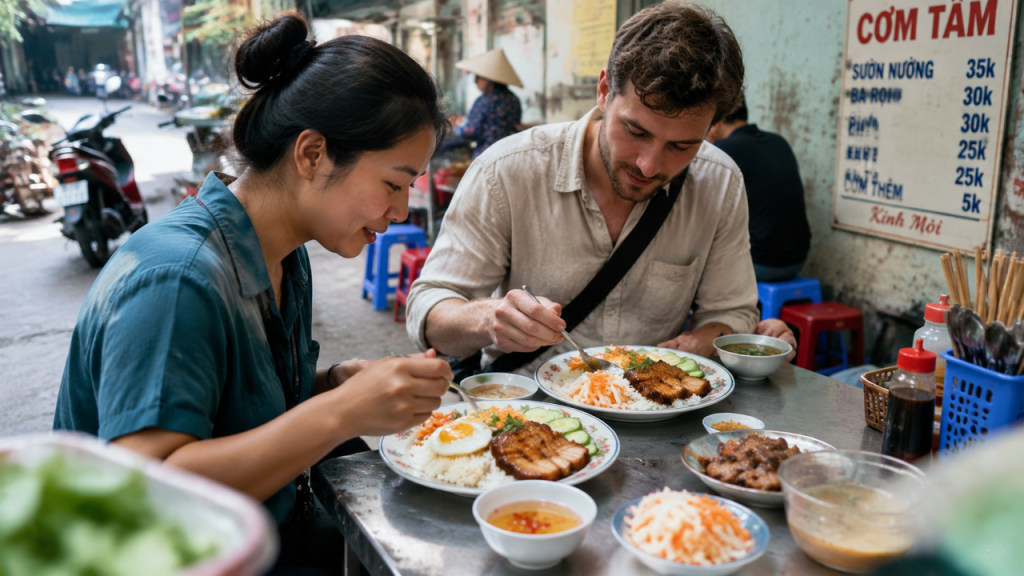
Long Xuyen-style com tam can be hard to recognize when Ho Chi Minh City menus use the broad label com tam for several regional plates. If you know Saigon com tam mainly as grilled pork over broken rice, the An Giang broken rice version may surprise you: its finer grains and carefully sliced toppings create a different balance of texture, sweetness, and comfort.
This quick guide breaks down the signature plate, explains how its braised pork and egg differ from the familiar grilled-rib version, and shares practical clues for choosing a place to try it in Ho Chi Minh City. Look for Long Xuyen on the menu, ask about the rice and toppings, and pair your food hunt with local Vietnam experiences if you are planning a wider adventure.
What Defines Long Xuyen-Style Com Tam? *(220–250 words)*
Long Xuyen-style com tam is a Mekong Delta take on broken-rice comfort food, recognized for fine grains and a carefully layered mix of pork, egg, and savory-sweet accents. Its identity comes from Long Xuyen, a city in An Giang, where the dish is a familiar local meal rather than a novelty.
Its Roots in Long Xuyen and An Giang
Across southern Vietnam, com tam changes from one place to another. Long Xuyen’s version carries the taste of An Giang: humble rice, home-style toppings, and a balance that can lean sweet. For adventurous eaters, that regional detail is the point; the plate offers a quick, delicious introduction to the food culture of the Mekong Delta.
The Signature Combination of Broken Rice and Toppings
A typical serving pairs small, fine broken-rice grains with thin-cut pork and egg. Shredded pork skin, scallion oil, and fish sauce add contrast, aroma, and moisture. The ingredients are arranged in small pieces, so a forkful can bring several textures together without a large grilled chop dominating the plate.
At a glance: Long Xuyen-style com tam is fine broken rice served with small-cut pork and egg, often joined by shredded pork skin, scallion oil, and fish sauce. The exact toppings and seasoning vary by cook or restaurant, so two local plates may share a style without being identical.
| Feature | Long Xuyen style | What to notice |
|---|---|---|
| Rice | Fine broken grains | Light, distinct texture |
| Toppings | Small-cut pork and egg | Often with skin and scallion oil |
Order it as served first, then add fish sauce gradually; a little can bring the rice and toppings into focus, while too much may overpower their subtler flavors. Recipes differ, which is part of the pleasure of eating locally. If you are mapping out a food-led visit, browse local tour options alongside your own market and neighborhood stops.
How Long Xuyen-Style Com Tam Is Served and Eaten *(220–250 words)*
How the Rice, Pork, Egg, and Accompaniments Come Together
Long Xuyen-style com tam is usually served as a compact plate of fine broken rice topped with thin strips of braised pork and boiled egg, with pickles and fish sauce on the side. The rice is soft yet slightly firm, while the pork brings savory sweetness and a mix of tender lean meat and chewy, rich edges.
Scallion oil adds a fragrant, lightly savory gloss to the warm rice. The egg gives each bite a mellow, creamy note, and crisp pickles cut through the richer toppings. A spoonful of the regionally sweet fish sauce ties the plate together; add it gradually so the rice stays balanced rather than overly sweet.
| Element | Texture | Flavor | What it adds |
|---|---|---|---|
| Fine broken rice | Soft, lightly firm | Mild and fragrant | A gentle base |
| Pork and egg | Tender, creamy, chewy | Savory and sweet | The main topping |
What to Expect When Ordering a Plate
At a neighborhood stall, you can keep the order simple: one Long Xuyen-style com tam with pork, egg, pickles, scallion oil, and fish sauce. Depending on the restaurant, the standard plate may arrive assembled, or you may be asked whether you want sauce on the side.
- Ask for extra fish sauce if you like a sweeter, more seasoned bite.
- Check whether pork chop or fried egg is available as an add-on.
- Start with a little sauce, then adjust after tasting.
Menus and toppings vary by shop, so point to what looks good if names are unfamiliar. After lunch, explore more local adventures to make room for another neighborhood discovery.
Where to Find Long Xuyen-Style Com Tam in Ho Chi Minh City *(230–270 words)*
Long Xuyen-style com tam can be easy to miss in Ho Chi Minh City because some local rice shops list it only as com tam. Look for regional clues on the menu, then check recent details before crossing town for a plate.
To spot Long Xuyen-style com tam, search menus and restaurant descriptions for Long Xuyen or An Giang. If neither appears, check for thinly sliced caramelized pork and egg, smaller broken rice grains, pickles, and sweet fish sauce. These details help distinguish the regional plate from the familiar grilled-pork version.
What to Look for on Menus and at Local Rice Shops
Small neighborhood shops may post a short menu on a wall or list dishes on a delivery app. A menu photo can reveal the topping style even when the dish name is simply com tam. A quick, polite question about whether the pork is sliced or grilled can also clear things up.
- Regional name: Long Xuyen or An Giang
- Typical clues: sliced braised pork and egg, finer rice, sweet sauce
| Check | Useful clue | Why it matters | Next step |
|---|---|---|---|
| Menu | An Giang or sliced toppings | Signals regional style | Check dish photos |
| Visit details | Recent hours and reviews | Avoid a wasted trip | Confirm before leaving |
How to Choose a Place to Try It
Compare recent reviews with current menu photos, and verify opening hours on the day you plan to go. Check the location against your route: a tiny alley shop can be part of the adventure, but allow time to find its entrance and seating. If the photos show only grilled chops, it may be Saigon-style rather than Long Xuyen-style.
For a guided taste of the city, explore local food tours and ask whether a stop can match your interests. Choose a shop with clear, recent information, then follow the aroma down the alley.
How Long Xuyen-Style Com Tam Differs from Saigon Com Tam *(220–250 words)*
Long Xuyen-style com tam is a regional broken-rice plate known for finely cut toppings, often braised pork and egg, rather than the large grilled pork chop many visitors associate with Saigon com tam. Expect a more mixed, spoon-friendly bite, though recipes and serving styles vary by vendor.
Differences in Presentation, Toppings, and Eating Experience
In Long Xuyen, smaller rice grains may come with thin strips of caramelized pork and boiled egg, pickles, and a sweeter, thicker fish sauce. The toppings mingle across the plate, so each spoonful can combine tender pork, creamy yolk, and rice.
| What to expect | Long Xuyen style | Saigon style |
|---|---|---|
| Presentation | Small-cut toppings | Often a whole chop |
| Signature feel | Braised pork and egg | Grilled pork, sometimes egg |
Which Style to Choose Based on Your Preferences
Choose Saigon com tam if you want a substantial grilled chop and familiar smoky flavors. Pick Long Xuyen if you are curious about regional comfort food, prefer toppings cut into easy bites, or want pork and egg together. Ask what comes with the plate: some vendors offer add-ons such as a grilled chop or fried egg, and the rice, seasoning, and portion can differ.
For adventurous eaters, trying both is a tasty way to notice how one broken-rice dish changes across southern Vietnam. You can also browse local Vietnam tour options when planning a food-focused outing. Start with whichever plate sounds right, then follow your appetite to the next neighborhood stall.
Long Xuyen-Style Com Tam Tips, FAQs, and Where to Start *(230–270 words)*
Long Xuyen-style com tam is a southern Vietnamese broken-rice plate known for fine, firm rice grains, thin slices of caramelized pork and egg, pickles, and sweet fish sauce. Unlike the familiar Saigon plate, it usually skips the large grilled pork chop, making it an easy way to explore another regional flavor.
Ordering Tips and Common Misunderstandings
Broken rice describes the rice grains, not broken pieces of pork. If a menu is brief or only in Vietnamese, ask what toppings are included, whether fish sauce comes on the side, and how large the standard portion is. At a busy alley eatery, pointing to a menu photo is a perfectly practical way to order.
- Ask for extra pickles if you like a fresher contrast.
- Check before adding pork chops or fried eggs; they may cost extra.
- Taste the sauce first, then pour gradually if you prefer less sweetness.
Frequently Asked Questions
What is Long Xuyen-style com tam? A Mekong Delta variation featuring smaller broken rice, sliced braised pork and egg, and a typically sweet sauce.
How is it different from Saigon-style? Saigon plates often center on a grilled pork chop; Long Xuyen style is more finely sliced and gently braised.
| What to expect | Long Xuyen style | Saigon style |
|---|---|---|
| Signature topping | Sliced braised pork and egg | Often a grilled pork chop |
| First-bite feel | Fine rice, savory-sweet sauce | Smoky, grilled flavors |
What toppings come with it? Commonly pork, egg, pickles, and sauce; extras vary by shop. Where can I try it in Ho Chi Minh City? District 3 spot Cơm Tấm Tị Quỳnh has been reported serving it, but check its current menu, hours, and reviews before traveling. Is it good for a first-timer? Yes: the familiar rice-and-pork combination makes it approachable, while the texture and sauce offer something new.
A Light Next Step
Check a recent local listing before setting out, then order Long Xuyen style beside a Saigon-style plate and compare the rice, topping, and sauce. For travelers who like pairing food stops with neighborhood discoveries, browse local Vietnam tour ideas. Pick a busy but comfortable spot, follow the menu, and let the first bite guide your next order.