Things to Do in Cho Lon: A Street-Food Adventure
Things to do in Cho Lon can feel hard to pin down when central Ho Chi Minh City’s famous sights dominate every itinerary. The reward lies beyond that familiar circuit: a working Chinatown where incense curls from temple courtyards, market sellers stack goods before sunrise, and lunch might come from a tiny family-run stall. This guide helps you explore with curiosity, confidence, and respect for daily life.
Plan for a lively mix of Chinese-Vietnamese heritage, historic landmarks, bustling markets, and street food, with practical tips to make each stop easier to navigate. Wander past Binh Tay Market, pause at a neighborhood pagoda, then follow the aromas toward dumplings or a steaming bowl of noodles. For a deeper local perspective, browse small-group Vietnam tours before setting out on your own Cho Lon adventure.
Things to Do in Cho Lon: Understand the Neighborhood First
The best things to do in Cho Lon start with noticing how the neighborhood works. This historic Chinatown stretches across parts of Districts 5 and 6, where Chinese-Vietnamese heritage meets wholesale trade, family businesses, temples, and everyday street life.
Unlike central District 1, Cho Lon is less about polished landmarks and more about watching a working neighborhood unfold. Give yourself time to wander, pause for a snack, and let a market lane or incense-filled courtyard set the pace.
Where Cho Lon Is and What Makes It Distinct
Cho Lon is Ho Chi Minh City’s long-established Chinese-Vietnamese quarter, not one single attraction with a defined entrance. Around Binh Tay Market and nearby streets, shopkeepers move cartons, residents make offerings, and food stalls serve people on their way to work. Look closely and the commercial rhythm sits alongside religious life.
For a deeper local perspective, browse locally guided city tours and choose an experience that fits your pace.
Quick answer: Allow at least half a day to explore Cho Lon. Go in the morning for market activity and cooler streets; stay longer for temples, alleyways, and food stops. A full day suits travelers who want to explore slowly, take breaks, and see the neighborhood beyond its busiest blocks.
When to Visit and How Much Time to Allow
Mornings are best for market energy and observing vendors at work. Festivals can bring extra color and activity to temples and streets, though dates and crowds vary, so check local schedules before setting out.
| Visit length | Best for | Suggested pace | Good timing |
|---|---|---|---|
| Half day | Markets and a first taste | Choose a few nearby stops | Morning |
| Full day | Markets, temples, and food | Leave room for unplanned detours | Morning to afternoon |
Traveling solo or with family, keep water handy and cross busy roads carefully. For an easy way to turn your curiosity into a route, explore Street Food Adventure experiences and plan your Cho Lon adventure.
Best Things to Do in Cho Lon: Temples, Markets, and Alleys
The best things to do in Cho Lon bring you close to the neighborhood’s living culture, not just its landmarks. The challenge is knowing where to pause, when to keep moving, and how to visit homes and places of worship without treating them like a set.
Pair ornate temples with the bustle of Binh Tay Market, then slow down in Hao Si Phuong alley. A little awareness goes a long way: dress modestly, ask before photographing people, and leave room for residents and traders to carry on with their day.
Visit Thien Hau Temple and Cho Lon’s Historic Pagodas
Thien Hau Temple honors the sea goddess who protects seafarers. Look for carved roof figures, detailed woodwork, and coils of incense overhead. Quan Am Pagoda offers another window into local Chinese-Vietnamese devotional life, with altars and decorative details best explored quietly.
At either temple, cover shoulders where practical, speak softly, and avoid interrupting worshippers. Ask before taking close-up photos of people or rituals. For context on spiritual customs, a beliefs and culture tour can add useful local perspective.
Explore Binh Tay Market, Hao Si Phuong Alley, and Cha Tam Church
Binh Tay Market is a working wholesale hub: watch the flow of porters, deliveries, and shoppers, rather than expecting every stall to sell single items. Hao Si Phuong is a lived-in residential alley, so keep voices low and do not enter private doorways. Cha Tam Church brings another layer to Cho Lon’s history through its distinctive Chinese-influenced setting.
Quick choice: Temples suit architecture and quiet observation; the market is for commercial energy; the alley rewards a respectful, unhurried walk.
| Stop | Best for | Visitor tip | Atmosphere |
|---|---|---|---|
| Thien Hau and Quan Am | Devotional art | Dress modestly | Quiet and reverent |
| Binh Tay Market | Wholesale trade | Watch for moving goods | Busy and practical |
| Hao Si Phuong and Cha Tam | Local life and history | Respect privacy | Residential and reflective |
Want to explore beyond the main stops with a local guide? Browse Vietnam tour options and choose an experience that fits your pace.
Taste Cho Lon Through Its Markets and Street Food
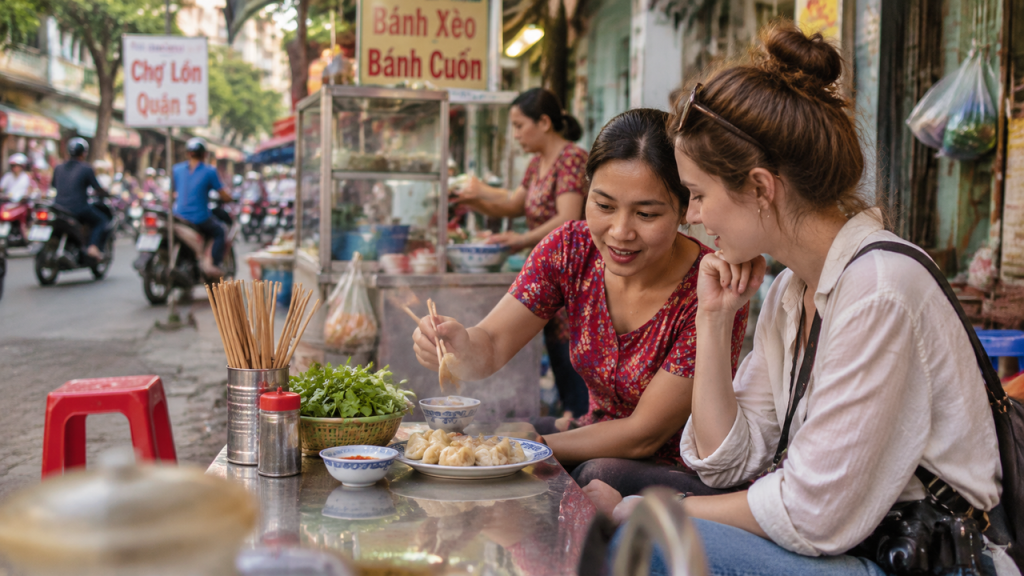
Among the most rewarding things to do in Cho Lon is to follow the food trail, not just the market aisles. For first-time visitors, the challenge is knowing what to order and where everyday local flavors are easiest to find.
Cho Lon cooking blends Chinese roots with Vietnamese ingredients and habits. Start near Binh Tay Market, then wander nearby streets for busy food stalls and small eateries. If you want more context along the way, explore local Vietnam experiences before setting out.
Try Chinese-Vietnamese Specialties and Cho Lon Street Food
Look for dim sum, hu tieu, roasted duck, and chè. These dishes show the neighborhood’s cultural mix: dumplings and roast meats sit naturally beside Vietnamese noodle broths and sweet, cooling desserts.
Quick food guide: Dim sum suits a shared breakfast; hu tieu makes a satisfying noodle lunch; roasted duck is a savory meal to share; chè is a refreshing sweet finish. Ask what is freshly made and point to a menu item if names are unfamiliar.
Find Food Around Markets and Neighborhood Streets
| Dish | Best for | Where to look |
|---|---|---|
| Dim sum | Breakfast and sharing | Market-side eateries |
| Hu tieu | A warming noodle meal | Busy neighborhood stalls |
| Chè | A sweet afternoon break | Small dessert counters |
Choose a stall with steady local traffic and food turning over quickly. Check the displayed price, then order one dish at a time; a smile and a simple point work well. Go with a local guide if you want help navigating menus and customs, and browse guided food and culture tours to plan an easy introduction to the district.
Plan Your Cho Lon Visit: Walking, Transit, or a Guided Tour
Planning things to do in Cho Lon is easier when you match your route to your energy, not just a map. The district is lively, distances can feel longer in the heat, and busy crossings may slow a first visit. A simple plan leaves room for detours without turning the day into a march.
For a half-day, pair one landmark with a market visit and a nearby food stop, then use a ride-hailing app if the heat or traffic catches up with you. A full day lets you wander at a slower pace, pause for coffee, and explore side streets between planned stops.
Choose a Route That Fits Your Time and Interests
Quick answer: For a half-day in Cho Lon, visit one cultural landmark, spend time browsing a market, and finish with a casual food stop. With a full day, add unhurried walks, coffee breaks, and neighborhood pauses. Keep the route flexible, carry water, and use a short ride when heat or distance makes walking tiring.
Start early for cooler walking and more active market scenes. If you want the independent street-level experience, browse local Vietnam experiences for ideas before setting out, then save your chosen stops offline.
Compare Independent Exploring with a Guided Experience
Walking gives you freedom to follow a lively lane; public transit and ride-hailing help cover longer gaps. A guide can add context, bridge language gaps, and help you discover places you might pass by. Families may prefer fewer walking stretches, while adventurous solo travelers often enjoy choosing turns as they go.
| Approach | Best for | Watch for | Local advantage |
|---|---|---|---|
| Walk and explore | Flexible short routes | Heat and crossings | Easy spontaneous detours |
| Guide with transport | Deeper context | Fixed schedule | Language and local insight |
Want the stories and street-level details without planning every turn? Explore guided tour options and choose an experience that suits your pace.
Cho Lon Travel Tips, FAQs, and a Simple Next Step
Planning the things to do in Cho Lon is easier when you leave room for the neighborhood to set the pace. Markets, temples, and food stalls can keep different hours, so check ahead and carry small notes for snacks and local purchases.
At pagodas and churches, dress modestly and follow posted guidance; ask before photographing people. In busy market lanes, keep valuables close and stay alert to motorbikes. A little preparation leaves more attention for the good stuff: a steaming bowl, a lively shopfront, or a conversation with a vendor.
Avoid Common First-Visit Mistakes
- Check opening times before crossing town, especially for religious sites and markets.
- Bring cash in small denominations; many small stalls may not accept cards.
- Keep bags secure in crowds, and step aside before checking your phone or map.
Quick answer: Cho Lon is worth exploring for its Chinese-Vietnamese heritage, active markets, historic religious sites, and distinctive street food. Allow around half a day for a relaxed visit, wear respectful clothing at sacred places, bring cash, and leave a little time to follow an appealing smell down an unfamiliar lane.
FAQs About Things to Do in Cho Lon
Is Cho Lon worth visiting? Yes, especially if you enjoy local food, community life, and cultural history beyond central Ho Chi Minh City.
How many hours do you need? Plan three to five hours for a few key stops and a meal; add time if you want to wander.
What is Cho Lon best known for? Its Chinese-Vietnamese heritage, wholesale markets, pagodas, and food traditions.
Can you explore on foot? Yes, but distances and traffic add up. Walk between nearby stops and use a taxi or ride-hailing service for longer hops.
What should you eat? Try dumplings, dim sum, satay noodles, or a local soup; choose a busy stall where food is freshly prepared.
| Visit style | Best for | Plan | Keep in mind |
|---|---|---|---|
| Short visit | Markets and lunch | About three hours | Pick nearby stops |
| Slow wander | Food and local lanes | Half a day | Allow spontaneous breaks |
Make Room for an Unplanned Food Stop
Follow your route, but do not schedule every minute. If you want a local perspective and help connecting the stops, explore Vietnam food and culture tours. Then leave one final gap in the day for the stall or neighborhood corner you did not know to look for.