
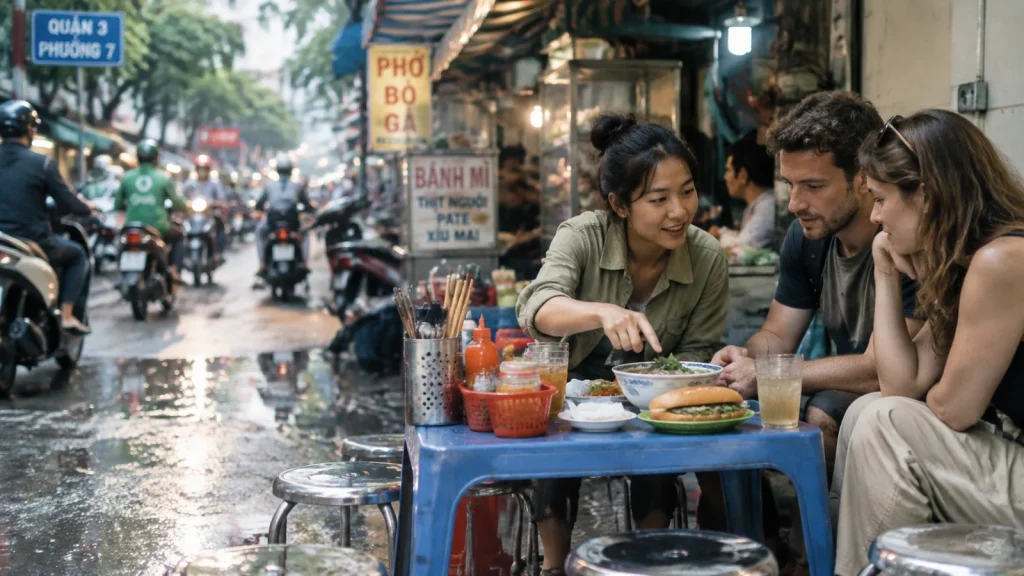
Most people looking for a Saigon food guide want the real deal, not a random list of popular dishes. In Ho Chi Minh City, that means knowing where the locals actually line up, what to order without guessing, and how to avoid wasting a meal on a weak tourist trap. This intro gives you a simple starting point for eating well from the first bite.
Think of this Saigon food guide as a street-smart shortcut through the city’s best flavors, from banh mi and pho to broken rice and coffee stops that keep the day moving. If you are here for a local, adventurous trip, this is the kind of plan that saves time, boosts confidence, and makes every food stop feel worth the walk. To plan each meal by the clock, see what to eat in Saigon by time of day.
What Makes the Saigon Food Guide Essential for First-Time Visitors
A Saigon food guide is the fastest way for first-time visitors to unlock the city without wasting meals on guesswork. Ho Chi Minh City can feel loud, fast, and a little chaotic when you land hungry, but the real reward is in the details: sizzling street stalls, tiny family kitchens, and bowls made for people who actually live here.
Saigon is known for its street food culture, Southern Vietnamese flavors, and local eateries that move at full speed. That means menus can be tiny, queues can be long, and the best dishes often disappear early. A smart guide helps you skip the tourist-heavy spots and go straight to the food that locals trust.
The city’s food scene is built around everyday eating, not polished presentation. You will find vendors grilling pork on the sidewalk, noodle soups served before sunrise, and casual shops where the owner knows exactly how spicy a regular wants it. That is why a good Ho Chi Minh City travel guide matters here: it saves time, reduces bad choices, and keeps your trip focused on flavor rather than trial and error.
For example, a first-timer might walk into the nearest banh mi shop near a busy tourist street and overpay for a weak sandwich. A better plan is to follow a route that matches your pace, whether you travel solo, as a couple, or with family. Build each day around one neighborhood and the food will follow.
| Criteria | The traveler | The route | The meal |
|---|---|---|---|
| Best for | First-time food explorers | Local street stalls | Fast, reliable decisions |
| Main benefit | Avoid tourist traps | Save time and energy | Find dishes worth the detour |
In short: a Saigon food guide helps first-time visitors eat better by highlighting local dishes, trusted street food stalls, and fast-moving neighborhood eateries. It saves time, avoids tourist traps, and makes it easier to find the foods Saigon is famous for, from banh mi and pho to broken rice and seafood.
If you want the real Saigon food story, start with the places where locals actually queue. That is the difference between eating in the city and eating the city. For travelers who like a more adventurous trip, this approach turns every meal into a small win and every district into a new flavor map.
For a soft next step, use a guide that connects food stops with the right neighborhoods, then build your day around your appetite. If you are ready to explore Saigon the local way, a curated route will always beat random searching. Keep going with the full guide, and let the city do the talking through its plates.
Must-Try Dishes in Any Saigon Food Guide
Most food travelers arrive in Saigon hungry, curious, and a little overwhelmed by the choices. The fastest way to eat like a local is to start with the dishes that define the city, then add a few drinks and snacks that keep the rhythm going from breakfast to late night.
For first-time visitors, the trick is not to chase everything at once. Focus on the classics, notice how each dish balances herbs, crunch, broth, and heat, then move through the city with confidence. That is how a short list becomes a real street food adventure in Saigon.
A good Saigon food guide should begin with the staples locals eat every day, because they explain the city better than any long restaurant list. Start with banh mi for a quick street-side bite, pho for a clean broth fix, hu tieu for a softer, more southern noodle bowl, com tam for a hearty rice plate, goi cuon for something fresh, and banh xeo for a crispy, shareable pan-fried pancake.
Each dish tells you something different about the city. Banh mi is the grab-and-go champion, pho shows how Saigon leans slightly sweeter and brighter than the north, and hu tieu often feels lighter but still layered. Com tam is the comfort meal many locals actually eat for lunch, while goi cuon and banh xeo are perfect when you want texture without heaviness. If you want to order phở like a regular, read our guide to phở in Saigon.
Local tip: the best approach is to order one dish at a time, not one giant feast. That keeps your palate sharp and helps you spot the details that make Saigon special.
| Criteria | Banh Mi | Pho | Com Tam |
|---|---|---|---|
| Best for | Fast snack or breakfast | Comforting noodle soup | Filling lunch or dinner |
| Eating style | Walk up and go | Sit down and sip slowly | Best with rice, pork, and pickles |
When your food crawl needs a break, Saigon’s drinks and snacks keep the energy up without slowing the pace. Vietnamese iced coffee is the classic wake-up call, sugarcane juice is the street-side refresher, che gives you a sweet finish, and fresh tropical fruit cuts through all the richness with something cold and bright. These are not extras, they are part of the full experience.
On hot afternoons, a strong ca phe sua da can reset your whole day, especially after a greasy banh xeo or a heavy rice plate. Sugarcane juice is the easy grab for couples, families, and solo travelers who want something local and thirst-quenching between stops. Che works best when you want to sit, cool down, and slow the pace. Fresh tropical fruit is the smart choice if you want a cleaner finish before heading to another meal. If the pancake is new to you, here is how to eat bánh xèo with herbs and dipping sauce.
If you want to eat these dishes with less guesswork, build your route around the busiest local stalls, not the fanciest places. Between meals, look for bột chiên, Saigon’s crispy fried rice cake, cooked to order on a wide flat pan.
The must-try dishes in Saigon are banh mi, pho, hu tieu, com tam, goi cuon, and banh xeo, plus Vietnamese iced coffee, sugarcane juice, che, and fresh tropical fruit. Together they show the city’s balance of bold flavor, freshness, and everyday street food energy.
If you are planning a real food-first trip, save this list, then map your day around breakfast, lunch, and night snacks so you can taste Saigon the way locals do.
How to Use a Saigon Food Guide Like a Local
Most people using a Saigon food guide want one thing fast: how to eat well without wasting a meal. The city moves at street speed, so the trick is to plan your hunger like a local, not like a tourist chasing the nearest famous name. Start with the daily rhythm, keep cash ready, and use the neighborhood flow to decide where to stop.
The easiest way to win in Saigon is to match food with the clock and the crowd. Breakfast stalls vanish early, lunch places fill with office workers, and late-night snacks turn up when the streets get loud again. That rhythm is the real map, and it helps solo travelers, couples, and families avoid empty seats, sold-out dishes, and overpriced traps.
How to use it: eat well by following the city’s eating rhythm, paying with small cash, reading stall menus by the main dish name, and choosing busy local zones like markets, alleys, and neighborhood streets. The best meals often come from places with fast turnover, simple seating, and a line of locals who already know what to order.
Plan the day around 4 eating windows: breakfast before 9AM, lunch from 11AM to 1PM, dinner after 6PM, and a late snack run from 9PM onward. That structure keeps you in the right place at the right time, especially if you want pho, broken rice, or a quick banh mi before the good stuff sells out. If you would rather have a local plan the stops, compare our Saigon food tours by time of day.
Ordering is simpler than it looks. Point to the dish name, say the protein, and keep your cash ready because many stalls still prefer notes over cards. A good rule is to watch locals first, then copy the flow: seat yourself only when invited, return chopsticks to the bowl after eating, and do not expect a long menu explanation at a busy stall. Small details matter, and they save time.
Best food zones to explore are local markets, narrow alleyways, night markets, and busy neighborhood streets in District 1, 3, 4, and 5. These are where vendors cook for repeat customers, not one-time visitors, which usually means fresher food and sharper pricing.
| Criteria | Best Choice | Why It Works | Local Tip |
|---|---|---|---|
| Breakfast | Street stalls near offices | Fast turnover and hot food | Go before 9AM |
| Night eating | Markets and alleyways | More snack options and energy | Bring small cash |
For a soft mid-guide move, use your food crawl to connect one dish to the next instead of crossing the city for every meal. That keeps the day relaxed and gives you more time on the street, where the real action happens. A good food route might go from breakfast pho to a lunch noodle bowl, then a quick dessert stop in the evening.
If you want the easiest local-style rule, follow this: eat where the line is real, choose the house specialty, and keep your order short. That formula works in markets, on side streets, and at tiny stalls with one pot, two stools, and a vendor moving like lightning. For travelers who want a smoother plan and more street-level confidence, this is where the guide becomes your best tool.
Use this chapter as your field manual: time your meals, carry cash, read the crowd, and trust busy corners more than polished storefronts. That is how you eat smarter in Saigon, move like a local, and get better food without overthinking the whole trip.
Ready to turn this into a full street food game plan? Start with the busiest zones, eat the house dish, and follow the rhythm of the city. If you want to go deeper, build your next day around a real food crawl and let the streets lead you to the best bowls, sandwiches, and late-night bites.
Self-Guided Eating vs. Guided Food Tours in Saigon: Which to Choose
Food travelers in Saigon usually face the same fork in the road: go solo and chase local stalls at your own pace, or join a guided food tour and let a pro handle the messy parts. The best choice depends on how much time you have, how confident you feel navigating the city, and whether you want maximum freedom or a smoother first taste of Saigon.
If you love street-level discovery, self-guided eating gives you more room to wander, repeat dishes, and follow your nose into tiny alleys. If you want fewer mistakes, faster routing, and local context, a guided ride can be the smarter move. Either way, the goal is the same: eat boldly, stay safe, and avoid wasting meals on tourist traps.
Self-guided food exploration vs. organized tours: convenience, flexibility, and authenticity
Self-guided exploration wins on flexibility. You can stop for a bowl of pho, detour for banh mi, then sit down again for broken rice without waiting for a group. It also lets you spend only on the dishes you really want. The downside is that you must do the homework: opening hours, neighborhood logic, and menu confusion all fall on you.
Guided tours are stronger on convenience and local insight. A good guide can explain what to order, help you read the room, and steer you toward places that locals actually trust. For first-timers, that matters. For a first daytime ride, Saigon Must-Eats by motorbike covers broken rice, bánh mì and old-style Saigon coffee. In practice, the best tours feel less like a checklist and more like a moving dinner with context.
| Criteria | Self-guided | Guided tour | Best for |
|---|---|---|---|
| Flexibility | High, you set the route | Fixed stops, less freedom | Independent food lovers |
| Local insight | Depends on your research | Strong, guide explains dishes | First-timers and solo travelers |
Quick answer: choose self-guided food exploration if you want freedom, lower cost, and a slower street food pace. Choose a guided food tour if you want convenience, local storytelling, and less guesswork. Repeat visitors and independent eaters usually prefer solo eating, while first-time visitors and cautious solo travelers often get more value from a guided route.
How to choose the right approach: independent travelers, first-timers, solo travelers, and food lovers
Independent travelers who like to wander should lean self-guided because Saigon rewards curiosity more than perfection. You can eat well with a map, a few trusted names, and basic Vietnamese food terms. First-timers, especially those landing in a busy district like District 1, often get better momentum with a guide because the city can feel chaotic at street level.
Solo travelers usually enjoy a hybrid approach: one guided meal on day one, then independent hunting after that. Couples and families often prefer a guided tour for the first evening because it removes friction and creates a shared experience. Serious food lovers may want both, since tours teach the logic and self-guided wandering delivers the surprise. For a first evening, Saigon After Dark, our night food tour by motorbike, takes you through the busiest night streets. The smart move is to match your style to your energy, not to chase the most adventurous option on paper.
Quick decision guide:
- Choose self-guided if you want freedom, lower cost, and repeat visits
- Choose guided if you want easier navigation and local explanation
- Choose hybrid if you want a safe first day and more independence later
If you are planning a longer stay, start with one guided food night, then use what you learn to build your own Saigon food guide for the rest of the trip.
For travelers who want to eat like locals without wasting time, a guided food ride is the fastest way to unlock Saigon: check dates for Saigon Must-Eats, then keep exploring on your own with more confidence and better taste.
Common Mistakes, FAQ, and Final Tips for the Saigon Food Guide
Most food mistakes in Saigon come from playing it too safe. If you only eat in tourist-heavy blocks, you miss the stalls that locals trust for speed, freshness, and flavor. The fix is simple: go where the crowd is, time your meals right, and let the busiest wok or grill lead the way.
Peak hours matter in Saigon. A stall that looks quiet at 10 a.m. may be packed at 11:30, and that shift often tells you more than any review ever will. For first-timers, that rhythm is part of the fun, especially when you keep your day loose enough for surprises.
The short version: start with one neighborhood, choose one dish type, and eat where locals line up. In Saigon, popular stalls are usually popular for a reason. Watch turnover, check the queue, and avoid the emptiest option at lunch or breakfast peak. That is the quickest way to eat better and waste less time.
| Criteria | Best Choice | Avoid | Why It Matters |
|---|---|---|---|
| Food safety | Busy stall with fast turnover | Almost empty cart | Higher turnover often means fresher food |
| Meal timing | Arrive near opening or before the rush | Showing up after the lunch wave | Popular dishes sell out and lines get slow |
Is street food safe in Saigon?
Usually yes when the stall is busy, the ingredients look fresh, and the cooking is hot.
What should you eat first in Saigon?
Banh mi or pho are the easiest warm-up dishes for most travelers.
How much should you plan to spend on street food?
Plan around 80,000 to 250,000 VND per person for a satisfying food crawl, depending on how many stops you make.
Where should you start eating in Saigon?
Pick one district and build around a few proven stalls instead of crossing the whole city for one meal. That is how you keep the day relaxed, and it is also how many travelers discover a favorite new spot on their first night. Before your first plastic-stool dinner, read up on Vietnamese table manners.
For couples, solo travelers, and families, the smartest move is simple: follow the crowds, stay curious, and do not overplan every bite. The best Saigon meal often comes from the stall that looks ordinary but stays busy for a reason. Start with one neighborhood, trust the line, and let your Saigon food guide turn every meal into an adventure.
Final tip: if you have room after the food crawl, take a slow walk through the alleys around your last stall, because Saigon tastes even better when you understand the streets behind the food.